Trump Has Made His View of Migrants Clear Last Sunday was the day that Daniel Garcia, a Venezuelan delivery worker living in Colombia’s capital, planned to begin an arduous overland journey to the United States.
Then Donald Trump became president-elect, and everything changed. Unsure whether he would be able to reach the border before Trump’s inauguration, and fearing he would be rejected once Trump took office, Garcia, 31, decided to stay. Storie News
“It’s a very high investment,” he said of the trip north, which he estimated would cost him $2,500, the equivalent of a year’s worth of his savings. “I’d rather not take the risk.”
With Trump now back in the White House, many would-be migrants are reconsidering their plans, while border officials struggle to understand what a Trump presidency might mean for the number of people trying to reach the United States.
Mr. Trump has made a sweeping crackdown on immigration a central plank of his campaign — a message that has resonated around the world Donald Trump.
In Mexico, humanitarian organizations and immigration officials are bracing for a possible influx of migrants into the United States before he takes office in January.
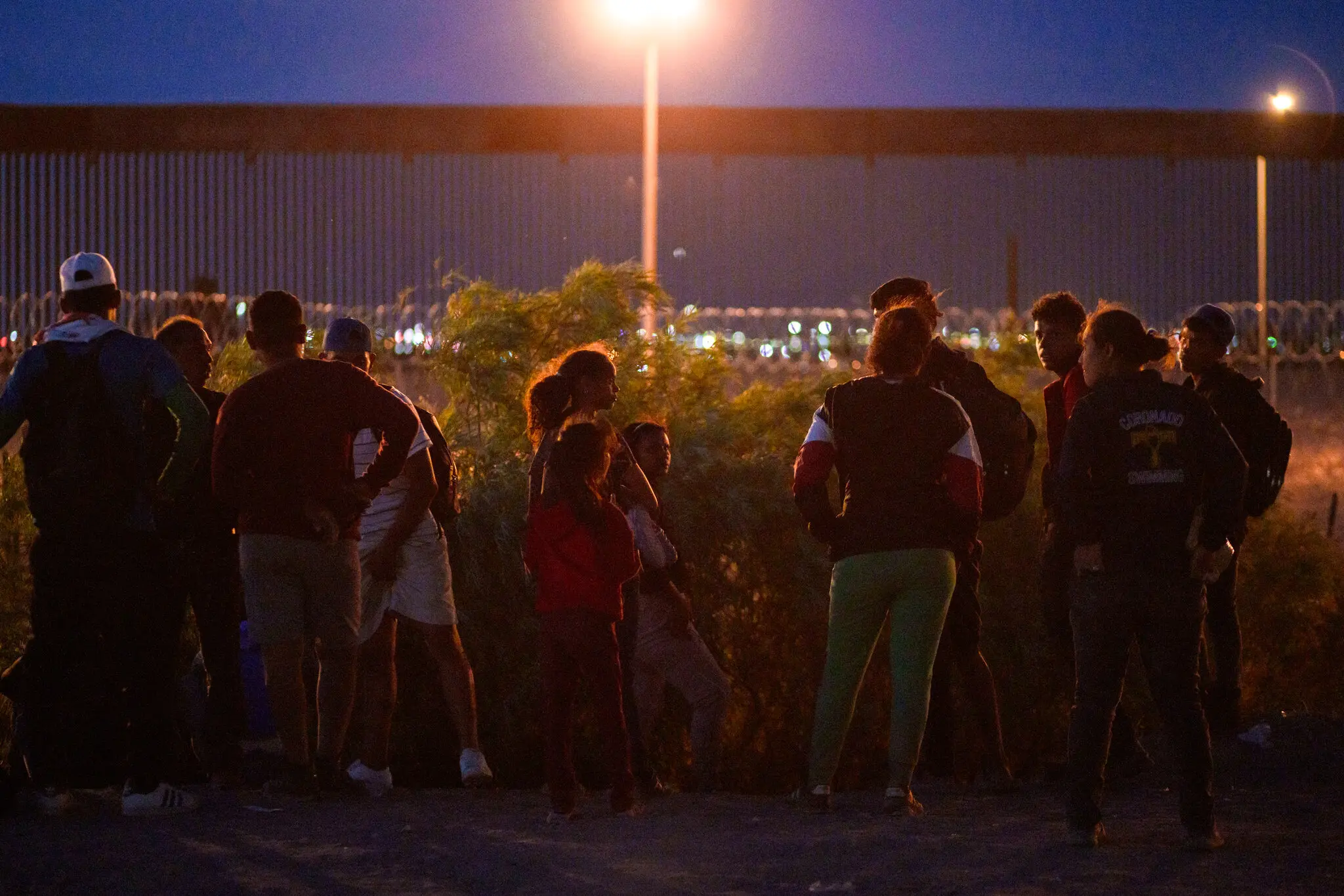
“The vast majority of migrants in Mexico will try to reach the border,” said Irineo Mujica, director of People Without Borders in Mexico. “The door is now closed, for sure, and many will try to escape.”
But it’s too early to tell whether that increase will actually happen. Online, in Facebook and WhatsApp groups where would-be migrants exchange information, smugglers are exploiting Trump’s election to urge people to use their services — now.
“There’s still time,” said one smuggler in a WhatsApp group for would-be migrants that has more than 400 members.
Trump Put Musk on Phone With Zelensky During Call
A healthy person, with some savings and luck, can make the long journey from South America to the U.S. border in about two months.
If someone is kidnapped, robbed or assaulted — all common experiences for migrants, especially when passing through Mexico — it can take even longer.
Of course, many migrants never even come close to the U.S.-Mexico border. They are deported, stopped by Mexican authorities, injured — or worse. But some who have considered making the trip said they have already decided that Mr. Trump’s election means they won’t try to reach the United States, whether by illegal or legal means. Some said they feared deportation, or simply an unwelcoming climate.
Trump has blamed immigrants for many of the United States’ problems, including crime and high housing costs, and has vowed to carry out the largest mass deportation in the country’s history.
In Maracaibo, Venezuela’s second-largest city, Josefina Quintero, 59, said her daughter left for the United States years ago and urged her to consider applying for a legal entry program known as humanitarian parole so the family can be reunited.
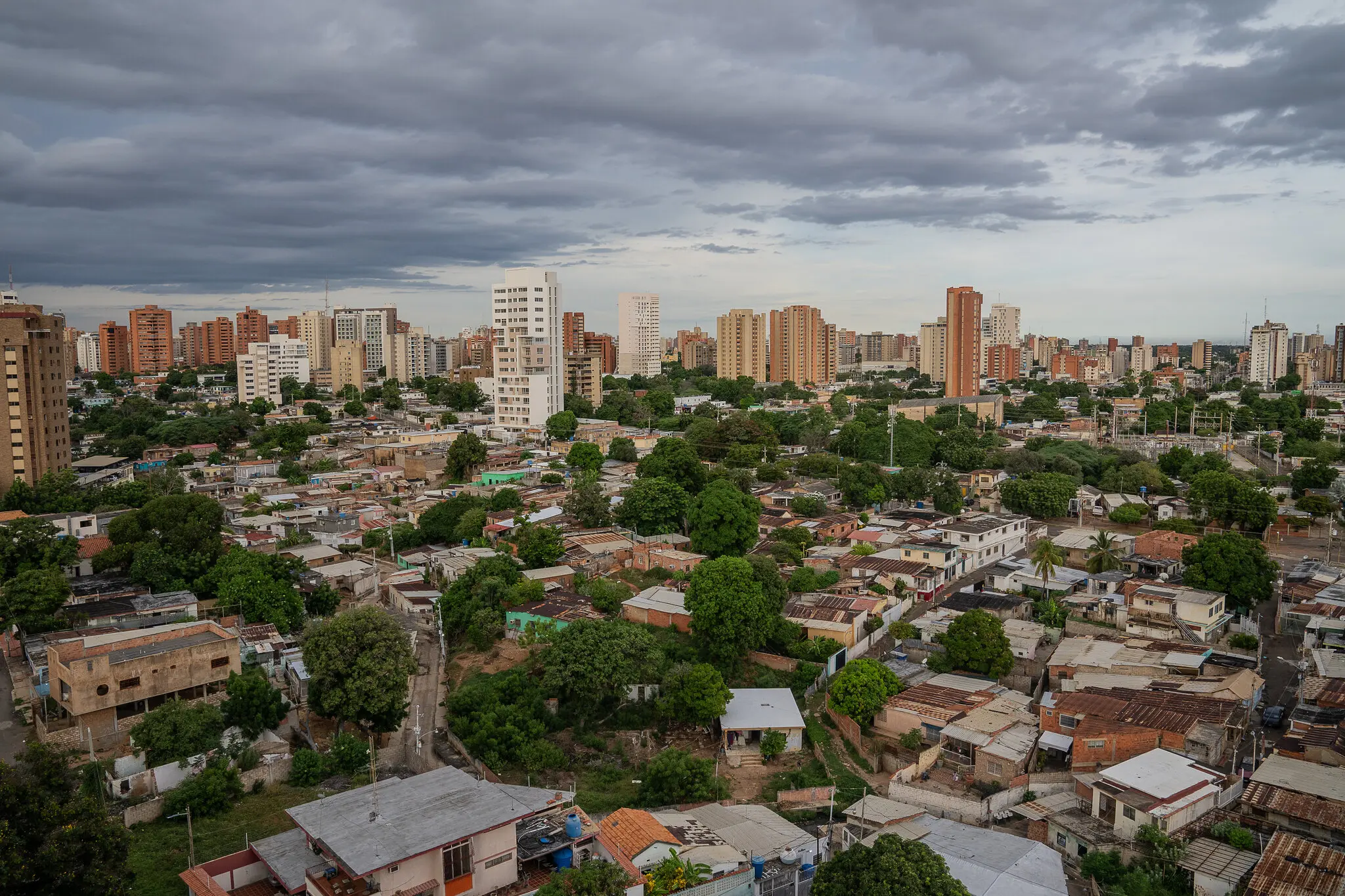
Ms. Quintero, who earns about $20 a week as a cleaner, did not apply for the job. She was worried about leaving her 90-year-old father, who has dementia, and now she believes Mr. Trump will end the program.
“This dream is over, and I have to stay,” she said. “It hurts me not to see my grandchildren in person, not to hug them. I will continue to talk to them on video calls until I have another opportunity.”
Migration rates at the southern U.S. border have soared to record levels under the Biden administration, driven by poverty and conflict in countries such as Venezuela and Ecuador. Another factor has been the growing popularity of a route through the Darién Gap, the jungle straddling South and North America that was once a formidable physical barrier for people seeking to travel to the United States.
Mr. Trump has criticized the Biden administration’s border and immigration policies, calling them too lenient. On the road to the United States over the past two years, several Venezuelans told New York Times reporters that part of their decision to make the journey had to do with a belief that Mr. Biden had created a special border entry policy for people from their country.
In 2022, the number of migrants detained by the military at the southern border rose to 2.2 million, sparking outrage in the United States and becoming a major focus of the November presidential election.
Crossings at the southern U.S. border have slowed in recent months as the Biden administration has cracked down, narrowing options for claiming asylum and encouraging countries along the route to make it harder for people to cross. The administration has also expanded legal entry programs.
The Mexican government has made it particularly difficult for people to move around the country, sending migrants who arrive in the northern part of the country to areas farther south, creating what one researcher has called a “migration spiral.”
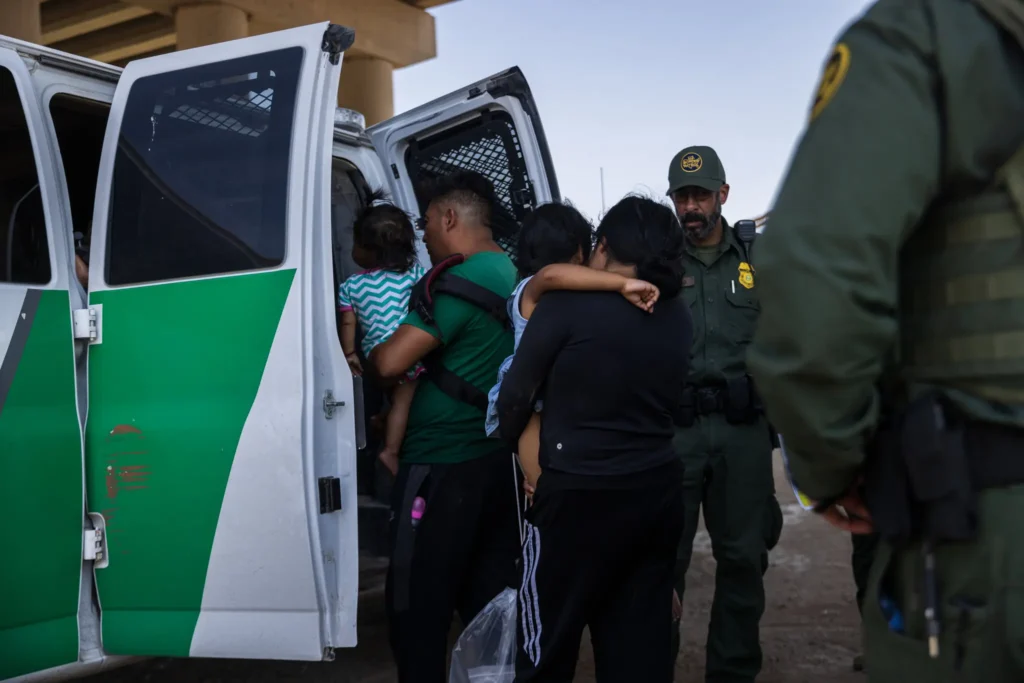
In this vicious cycle, migrants are forced to cross Mexico repeatedly to reach the U.S. border, being harassed at every turn by criminal groups who use violence to extract money. In some cases, they have fallen victim to immigration officials and even the armed forces.
Some people who have considered migrating in recent months said it was a growing understanding of the risks involved — not Mr. Trump’s election — that ultimately led them not to make the journey.
Berke Silva, 49, who lives in a working-class area of Caracas, Venezuela’s capital, said two of his relatives, a father and son, recently left for the United States to escape a wave of repression at home.
The last she heard from them, in early November, was that they had been kidnapped in Mexico and needed $4,000 to free them.
Encountering that kind of violence along the way, and facing “xenophobia or illegal residency” once in the United States, “is not something I want to experience,” she said.
Some would-be immigrants said they were considering staying for a different reason: A number of Venezuelans said they viewed Mr. Trump’s election as a potential positive for their country.
They believed the next president might be able to oust autocrat Nicolás Maduro, thereby eliminating the need to leave. (Analysts say that is unlikely to happen.)
Pedro Ron, 28, a delivery worker from Venezuela who lives in Bogotá, Colombia’s capital, said his neighborhood was filled with celebrating Venezuelans on Nov. 6, the day after Mr. Trump’s victory.
“We all cried when we heard the result,” he said, “and everyone said, ‘I hope Trump helps.’”
Fears at the U.S. border may have eased, but thousands of people are already on their way to the United States, and many more say they have firm migration plans — regardless of who is president.
In Ecuador, Javier Olivo, 50, a construction worker from Guayaquil, a large city on the country’s Pacific coast, said that because of his country’s security problems — where a burgeoning drug-trafficking industry has unleashed a wave of violence — he had been thinking about heading to the United States for years.
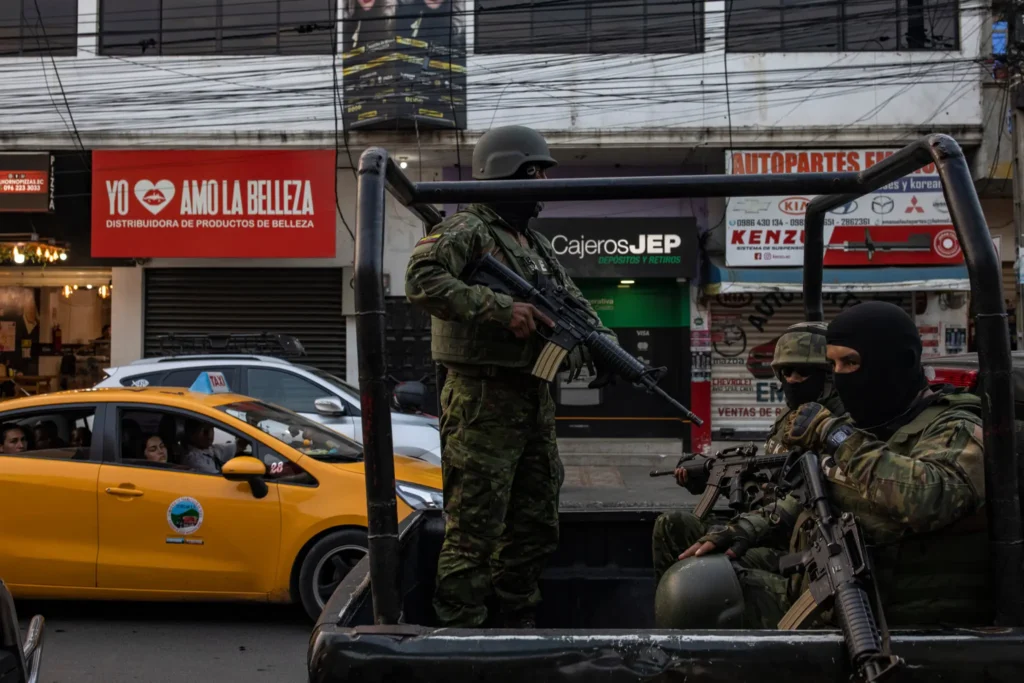
Now, recurring power outages — caused by a historic drought exacerbated by climate change — have made him even more eager to leave.
While he has heard that Trump intends to deal with migrants “roughly,” he said the decision to come to the United States with his wife has “already been made.”
“With God’s help, we hope things will go well for us there,” he said. He is scheduled to make his trip in May.
There are now three migrant caravans in southern Mexico heading north — the largest of which has about 1,600 people, according to the U.N. refugee agency.
More caravans, which migrants often join for protection from criminal groups, are expected to gather in the coming days, said Luis Rey Garcia Villagran, a migrant advocate who has helped organize them for years.
In a shelter in the Mexican border city of Tijuana, Rosalba Magallón, 45, said she used to sell quesadillas in the Mexican state of Michoacán until cartel members burned down her house when she refused to pay extortion fees.
She said Trump’s presidency didn’t matter. She fears cartel gunmen have followed her to Tijuana, and believes the United States is the only place she might find safety.
“I fled, and now I live in uncertainty. Obviously we are concerned about Trump’s arrival, but I cannot go back,” she said.