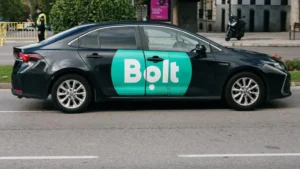
Bolt drivers win legal claim Thousands of Bolt drivers have won their legal bid to be recognised as workers, securing their rights to paid holidays and the minimum wage.
Following Friday’s landmark ruling by an employment tribunal, law firm Leigh Day said compensation owed to the 15,000 drivers they represent could be worth more than £200m. Storie News

The court ruled that the relationship between Bolt and its drivers did not constitute self-employment, as Bolt had claimed, but rather an employment arrangement that afforded drivers basic worker protections under employment law.
Thousands of UK Bolt drivers win legal claim to be classed as employees
Lee Day said the decision affected more than 100,000 drivers who work through the Bolt car rental app.
The decision was reached after a three-week hearing in September 2024.
Lee Day, who also represented Uber drivers in a similar successful claim in 2021, claims each Bolt driver could be eligible for more than £15,000 in retrospective compensation for non-payment and unpaid holiday pay.
The ruling affects more than 100,000 drivers who use the Bolt car rental app, who can now apply for worker status.
Ahead of the hearing, Bolt announced it would start offering paid leave and the National Living Wage from August 2024.
The court ruled that drivers should be compensated not only for trips but also for the time they spend logged into the app, provided they are not logged into other private hire apps at the same time.
Further hearings are scheduled to determine the exact compensation amounts for affected drivers.
Bolt drivers win right to holiday and minimum wage
Charlotte Pittman, employment lawyer at Leigh Day, said the ruling was a significant step forward in ensuring fair treatment for gig economy workers.
“We are very pleased that the Employment Tribunal has ruled in favour of our Bolt driver clients,” Ms Pittman said.
“This ruling confirms that gig economy operators cannot continue to wrongly classify their workers as independent contractors running their own businesses in order to avoid providing those workers with the rights they are properly entitled to.”
“We are calling on Bolt to compensate our clients without further delay,” she added.
Bolt, which is headquartered in Estonia, has not yet commented on the court’s decision.
A parallel claim on behalf of hundreds of Ola drivers is due to be heard at the Central London Employment Tribunal on Tuesday. The case is due to last eight days.
Bolt drivers to get £15,000 each in legal win that ‘goes further’ than Uber case
BOLT drivers are set to receive more than £15,000 each after winning a landmark workers’ rights case today that is believed to go further than the Supreme Court ruling in the Uber case.
Leigh Day began the case after the High Court ruled in 2021 that Uber drivers are workers rather than self-employed contractors.
The company said around 15,000 customers it represents will receive an expected £200m in damages for failing to pay the minimum wage and holiday pay after an employment tribunal ruled they were also workers.
The company explained that Bolt currently only pays its drivers for the time they spend on journeys, but after the ruling it must also pay for the time they spend logged into the app, provided they are not also logged into other private hire operators’ apps.

Charlotte Pitman, Leigh Day’s lawyer, said: “This ruling confirms that gig economy operators cannot continue to wrongly classify their workers as independent contractors running their own businesses in order to avoid providing those workers with the rights they are properly entitled to.”
“This is fantastic news and a relief,” said Shohel Ahmed, a Bolt racing driver in south London, who is married with three children.
“It’s satisfying to know that our hard work and long hours have been recognised, and that we can continue to fight for better pay and conditions, and receive compensation that will make a huge difference to my family’s life.”
Bolt drivers win worker status in employment battle
Eamonn O’Hearn, national officer for the Private Transport Drivers Association, said: “This ruling goes beyond the landmark case against Uber, in which the Private Transport Drivers Association played a leading role.
“It raises questions about the industry in relation to waiting times and multiple apps.
“We believe that workers’ rights around holiday should be universal, and this ruling confirms that fact.
“GMB will review the decision closely and engage with the industry to understand the implications for our members.”
GMB general secretary Zamir Drini said: “This ruling against Bolt is long overdue, but once again the poorest workers must spend years litigating while successive governments stand by.
“The ruling confirms our position on working hours and makes clear that Bolt and Uber have never complied with the High Court ruling, meaning that between 40 and 60 per cent of actual working time remains unpaid.
“Rather than forcing workers back to the courts for another decade of litigation, the government should step in now and reform the current Employment Bill, which has left out protections for gig workers, so that Britain’s hardworking minicab and delivery drivers can get the protections they deserve.”
A Bolt spokesperson said: “Drivers are at the heart of what we do, and we have always supported the overwhelming majority’s choice to remain self-employed, independent contractors, protecting their flexibility, personal control and earning potential.
“We will continue to engage with drivers as we carefully review our options, including the grounds for appeal, to ensure we are helping drivers succeed as entrepreneurs and grow on their own terms.”